
Build a Hurricane Search Trail
Begin a Hurricane search with the fact that is least likely to belong to someone else. A full name plus an old Hurricane address is far more useful than a surname alone. A Hurricane address can lead to a parcel, the parcel to a titled owner, and the recorded document to past owners. A known Hurricane court date can narrow a party-name result. For a former student, a school year and class can separate one person from others with the same name.
Hurricane City, Washington County, Utah courts, and state agencies each keep a different part of the Hurricane record trail. Hurricane is not the county seat. Many county counters and Fifth District files are in St. George, so a Hurricane people search often crosses that city boundary even when the person lived in Hurricane.
- Write down the full name, name variants, date range, and any known Hurricane address.
- Use the county property tools when an address, parcel, or owner is known.
- Check Utah Xchange for public district and justice court matters under the party name.
- Move to yearbooks, newspapers, birth registers, or probate files for an older family trail.
- When an online route stops, call the custodian or send a narrow GRAMA request.
Note: Save the source, access date, spelling, and record number for each match so later checks can confirm or reject it.
Hurricane Search Offices and Keepers
The City Recorder is the municipal hub for Hurricane minutes, ordinances, contracts, oaths, resolutions, and Hurricane records requests. County land records go elsewhere. The Washington County Recorder/Surveyor keeps Hurricane deeds, plats, maps, surveys, and ownership references, while the Assessor handles value and property characteristics. Hurricane court files belong to Utah Courts, not the County Clerk. That division matters because a request sent to the wrong office can end with a valid response that the office does not maintain the record.
These three offices are the most useful starting counters for a broad Hurricane records search. City offices sit in Hurricane, while the principal county offices are in St. George.
Washington County Recorder
111 E Tabernacle
St. George, UT 84770
(435) 301-7680
For access rules, copy fees, and the request process, use the focused Hurricane public records search. It keeps those details separate from the find-a-person workflow.
Trace Hurricane Property Names
Hurricane property records work well when a Hurricane street address is known. Washington County splits the Hurricane trail among separate systems. The Recorder Viewer is described as showing property and owner information, reports, and mailing labels. The Assessor Viewer supplies Hurricane property reports, photos, and sketches. The Treasurer handles tax bills, delinquencies, and mailing-address changes. County GIS adds parcel and map context but is not the final authority for title.
A clean Hurricane workflow is: physical address to parcel, parcel to current owner, current owner to recorded deed, and deed references to earlier owners. Washington County's Old Abstract viewer condenses title histories from 1854 through 1992, while historical ownership plats add parcel lines and owner references by year. Keep the Hurricane situs address, owner mailing address, account number, parcel number, and legal description apart. A mailing address can be a useful contact lead, but it does not prove where the titled owner lives. Likewise, a Hurricane deed names owners, not every occupant.
- Parcel number
- The database key that links a tract across county systems.
- Situs address
- The physical location of the land or building.
- Legal description
- The controlling lot, block, subdivision, or survey description in the deed.
- Abstract
- A condensed history of documents affecting title, not a replacement for the recorded instruments.
The Washington County map inventory shows why one Hurricane address may require more than one viewer.
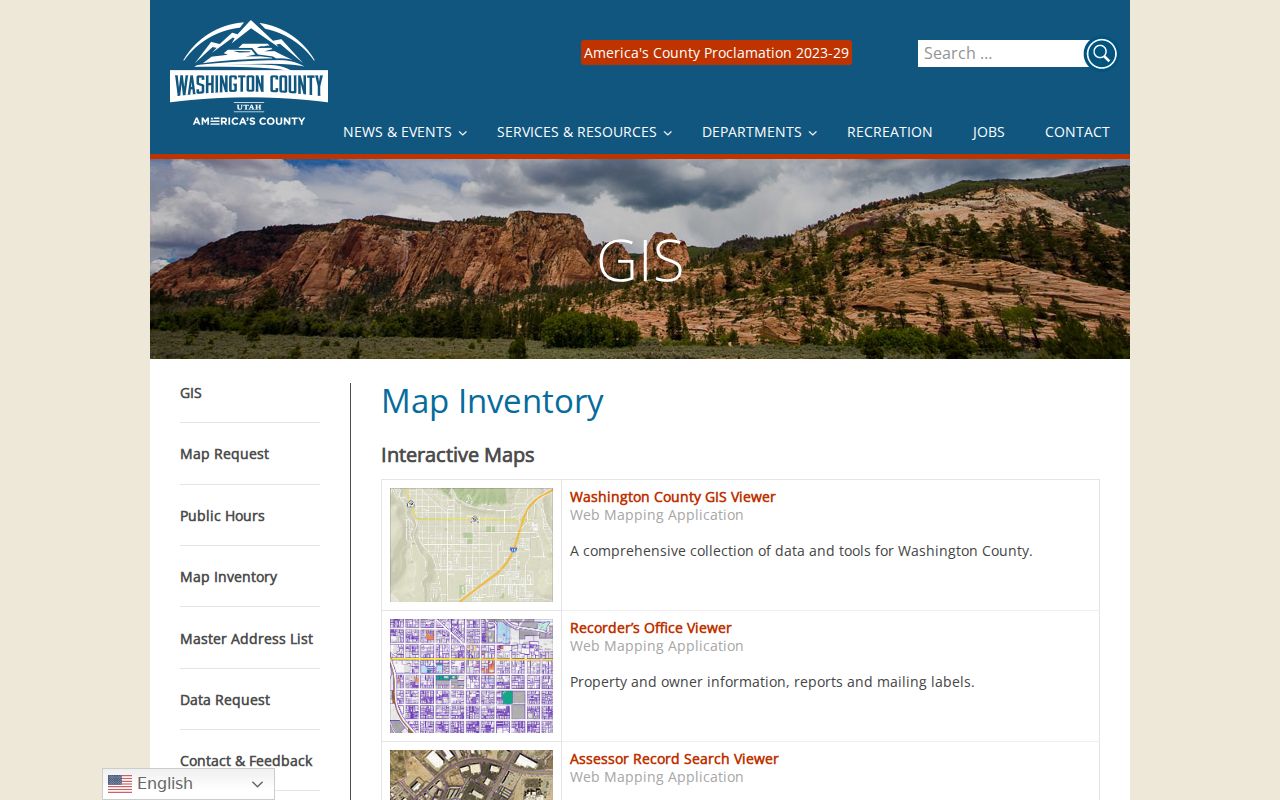
The screen separates Assessor, Recorder, GIS, Old Abstract, and historical ownership map routes instead of blending them into one result.
When Hurricane Portals Stop
Not every Hurricane records search ends online. During Hurricane research, the Recorder's current Property Search link returned an error, and the historical tools relied on JavaScript. That is a portal problem, not proof that the Hurricane record is missing. Call the Washington County Recorder at (435) 301-7680 or visit the counter at 111 E Tabernacle in St. George. The office can help with Hurricane ownership, legal descriptions, plats, acreage, maps, and document chains.
The same Hurricane fallback rule applies elsewhere. Free public Xchange terminals are available at most district courthouses and at the Utah State Law Library. A file court can supply copies or help with an archived Hurricane case. The Hurricane Branch can provide HeritageQuest access, while the St. George library branch is the documented location for county newspaper microfilm. A focused Hurricane request should name the person or address, record type, date span, and preferred format.
Note: Washington County's Recorder stops accepting recordings at 4:45 p.m. Mountain Time, though research and copy questions are different tasks.
Search Hurricane Court Names
Hurricane matters may appear in Hurricane/La Verkin Justice Court, Washington County Justice Court, Utah Fifth District Court, or federal court. Justice courts handle traffic, ordinances, infractions, class B and C misdemeanors, and small claims. Fifth District Court handles felonies, class A misdemeanors, general civil matters, divorce, and probate. Utah Xchange gathers public district and justice case data entered into the judiciary's CORIS system.
A Hurricane result can show party names and available addresses, the judge, attorneys, case number and type, filed documents, hearings, minute entries, judgments, and outcome. Timing and depth vary. Most district courts were on CORIS by the end of 1998, but Hurricane justice-court conversion dates differ and older converted files can be sparse. Sealed and expunged cases do not appear. Adoption, civil commitment, juvenile delinquency, child welfare, and parental-right termination matters also fall outside the public Xchange view.
| Hurricane court path | Typical records | Name route | Fallback |
|---|---|---|---|
| Hurricane/La Verkin Justice Court | Ordinance, traffic, small claims | Utah Xchange | Court clerk or counter |
| Fifth District Court | Civil, felony, divorce, probate | Utah Xchange | Free terminal or filing clerk |
| District of Utah | Federal cases | PACER party locator | Federal clerk |
The Xchange entry screen presents guest payment, subscriber login, and account creation routes for a Hurricane court search.
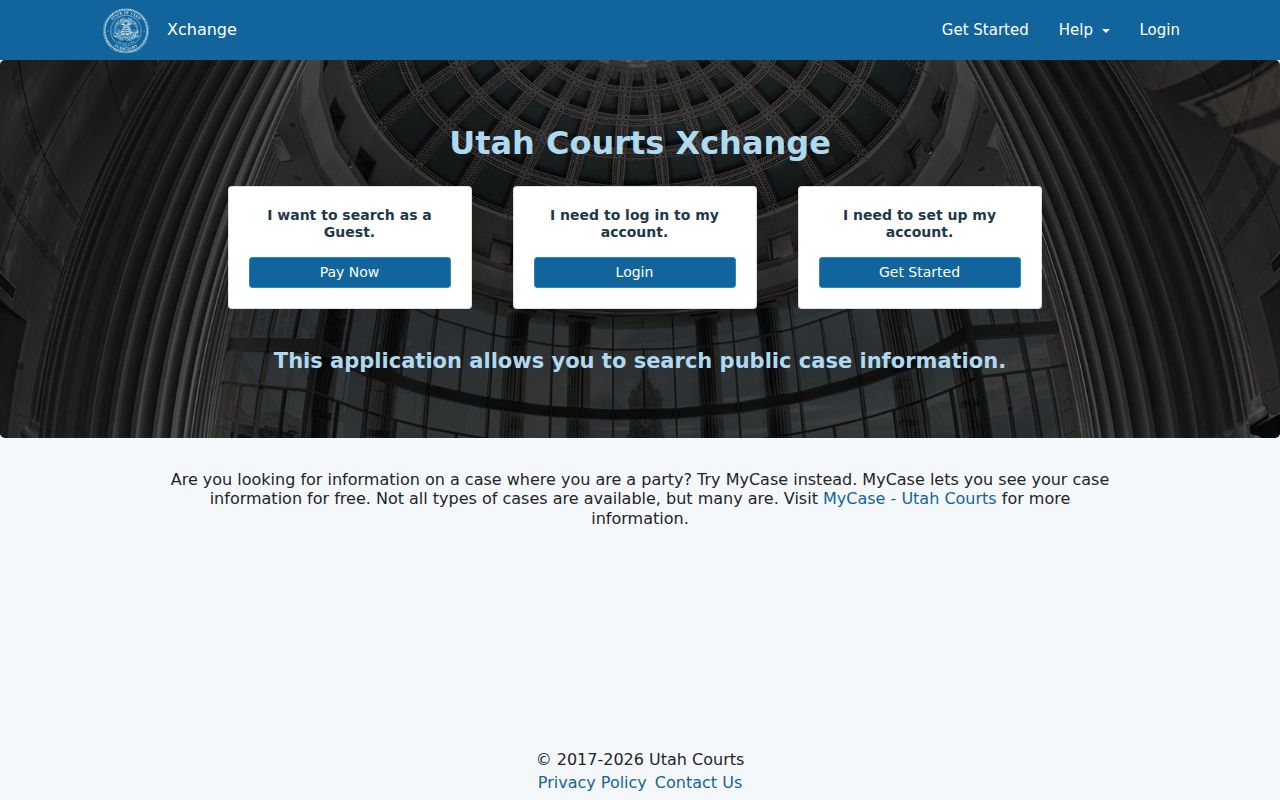
The web route is paid, while courthouse terminals provide an important free alternative for public case data.
Find Hurricane Vital Records
Utah Vital Records maintains Hurricane birth and death certificates from 1905 forward and marriage and divorce abstracts for 1978 through 2010. Washington County Clerk handles Hurricane marriages before 1978 and after 2010. Divorce court files come from the district court that finalized the Hurricane case. An abstract is not the decree, pleadings, or docket, so choose the custodian based on what the Hurricane search needs to prove.
Recent Hurricane certificates have eligibility and identity rules. Birth records become public after 100 years, death after 50 years, and marriage and divorce records after 75 years. Historical Hurricane records move into archival channels. Washington County birth registers in Utah Archives Series 3166 cover 1898 through 1905 and can show parents and residence. The later volume adds the child's name, birthplace, multiple-birth status, and attendant.
Utah also provides lawful routes for an adult adoptee through the original-birth-certificate process and the Mutual Consent Voluntary Adoption Registry. Those options can reconnect relatives without trying to work around a sealed adoption court file.
The Utah certificate ordering page explains current record coverage and who may request a restricted certificate.
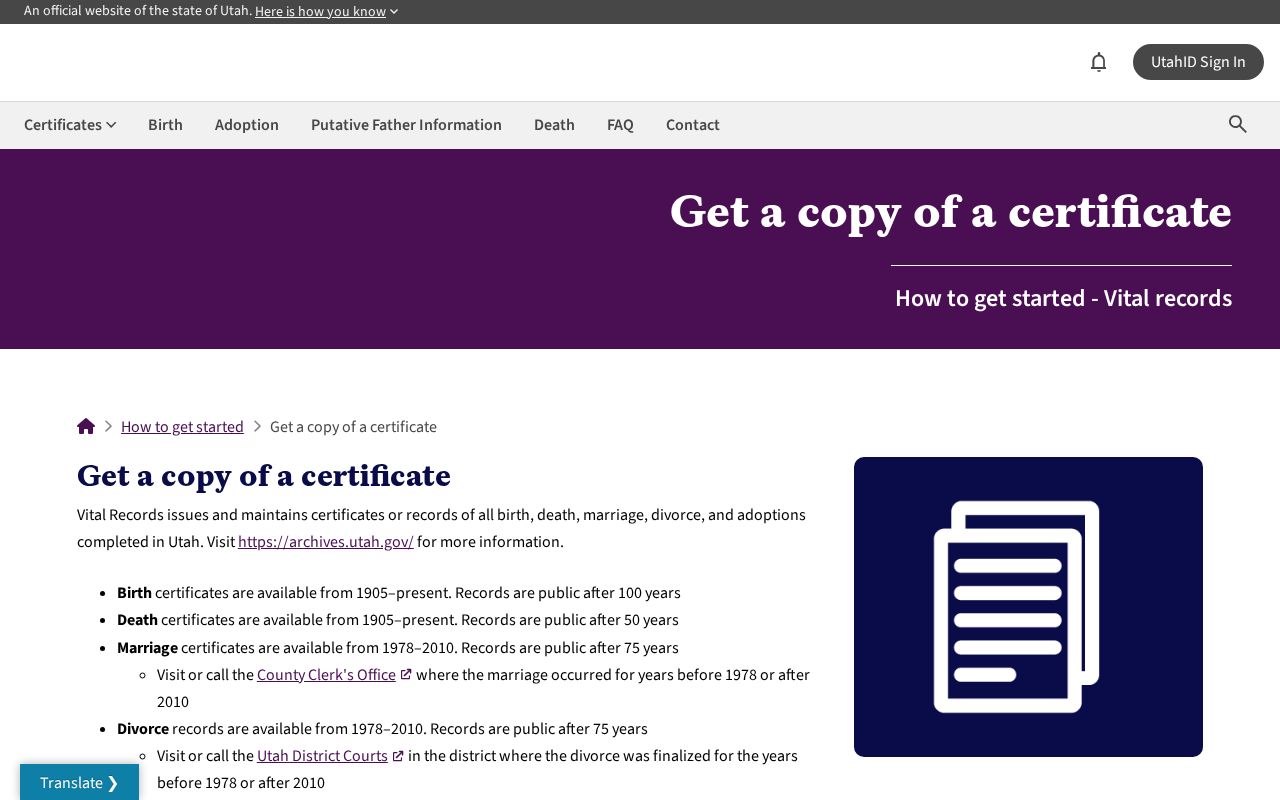
The order route asks for identity, relationship, event details, and proof when the record has not yet reached public age.
Reconnect Through Hurricane Yearbooks
School records can settle a same-name question when a year, class, or activity is known. Utah Tech University Special Collections holds five verified Hurricane High School yearbooks: 1928, 1930, 1931, 1938, and 1941. The Washington County Schools Yearbook Collection is open and free to researchers during Special Collections hours or by appointment in St. George. It is arranged by school and then by year.
A Hurricane yearbook can connect a name with a face, club, team, teacher, sibling, or graduating class. Those Hurricane links help guide a later newspaper or vital-record search. The five known dates are exact holdings, not a claim that no other Hurricane High volume exists elsewhere. For other Hurricane years, ask the repository, school, library, and interlibrary-loan staff before assuming a gap.
The Utah Tech finding aid identifies the Hurricane High volumes in the collection.
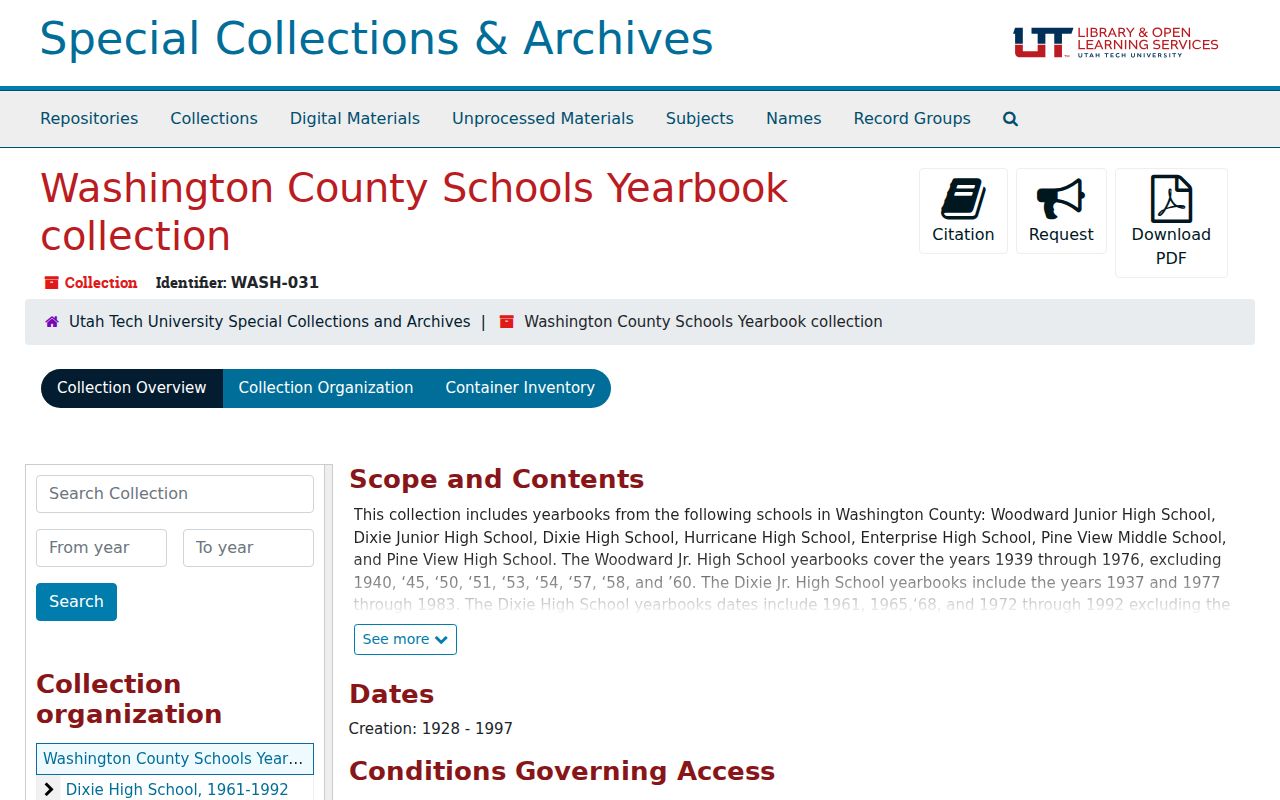
The finding aid turns a vague classmate search into a specific set of school years and an onsite research route.
Note: The published library catalog does not verify a separate Hurricane alumni directory, so yearbooks remain the stronger official source.
Search Hurricane Family History
The Hurricane Branch of the Washington County Library System offers local access to research help and HeritageQuest. Current county library-card holders may use HeritageQuest both inside and outside the library with a barcode. Its high-resolution census images come from microfilm. The St. George branch is the documented home for Washington County newspaper microfilm, which can supply obituaries, wedding notices, school news, land sales, and public notices.
For a deceased Hurricane resident, link the Hurricane death or obituary evidence to Fifth District probate indexes and the public court file. Petitions, notices, and letters can name a representative or heir. If a Hurricane title or microfilm roll is not held locally, Washington County interlibrary loan can request books, maps, articles, and film for adult county residents. Utah Archives adds searchable series descriptions, name indexes, and digitized county records.
The county library's genealogy access page shows the barcode route for HeritageQuest.
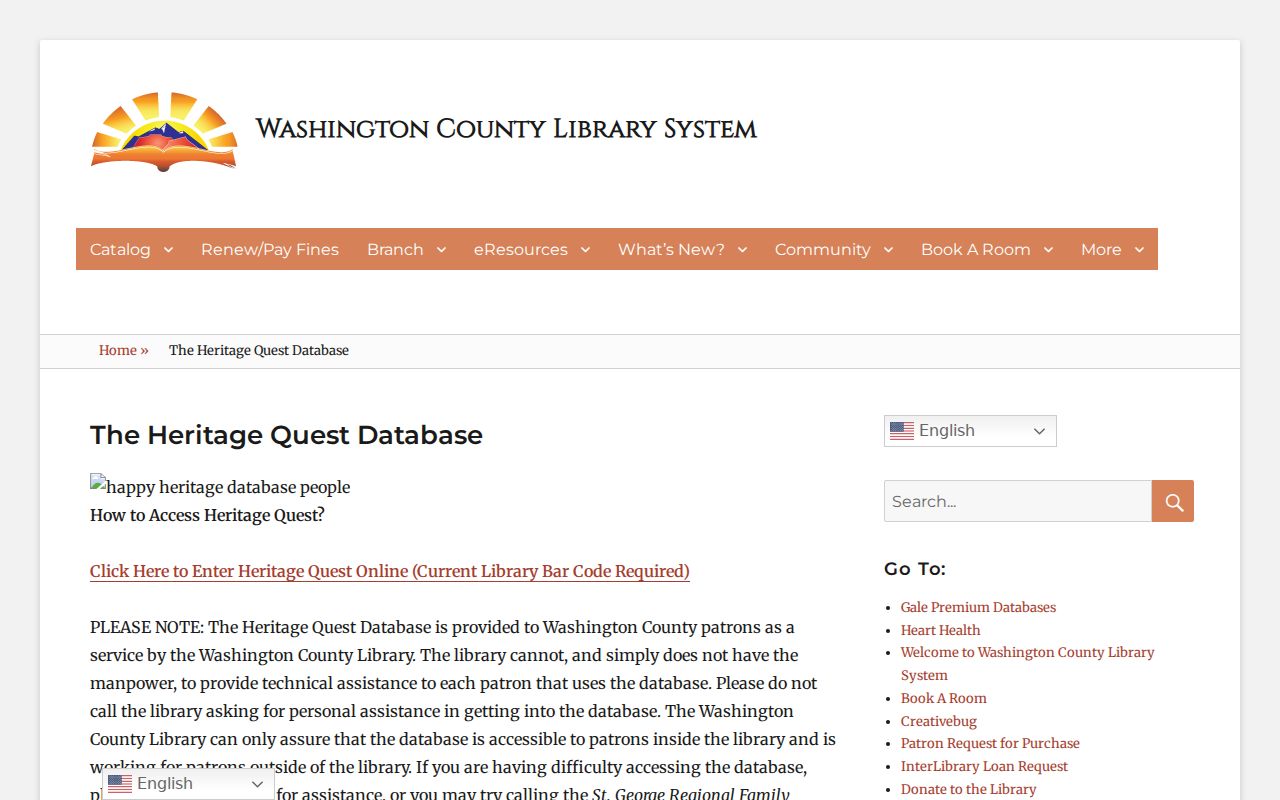
This library path is useful when an address or family name predates the county's current web portals.
Browse Hurricane Name Directories
Hurricane publishes two distinct city directories. The staff directory searches municipal employees by department, first name, or last name. Results can display name, title, email, phone, and additional phone. The Resource Directory works more like a community index. It offered alphabet browsing, category and name filters, ten-result pages, and 1,914 listings when inspected.
The resource results can include an organization or legal-entity name, a person or business activity, street and mailing addresses, phone, fax, email, and website. Some crawled entries appeared to place email or web values under inconsistent labels, so confirm the contact type at the linked organization. The detailed directory landscape, including school staff and historical sources, is covered in Hurricane local people directories.
| Staff search field | Control | Required | How it narrows results |
|---|---|---|---|
| Category | Dropdown | No | Limits results to a city department |
| First Name | Text | No | Matches a staff given name |
| Last Name | Text | No | Matches a staff surname |
| Search | Button | Not applicable | Runs the selected city directory query |
Note: JavaScript is required for the city staff listing, while the resource directory also supports alphabet browsing.
Verify Hurricane Business Names
A Hurricane business lead can be checked in two official statewide systems. Utah's Division of Corporations and Commercial Code supports searches for a Hurricane entity and filing-copy orders. Results may identify the Hurricane entity name and type, status, registered agent and address, and filed documents. A registered agent is a service contact. Do not assume that person owns the company.
DOPL Verify a License covers Utah-regulated occupations. Use it to confirm the credential and status shown on the lookup date, then consult an occupation-specific roster when one exists. It is narrow evidence, not a general judgment about the person. Pair the business entity with an address, a signed filing, a license record, or a recent public court document before deciding that two similar Hurricane names refer to one person.
The official Utah professional license search supplies the state credential route.
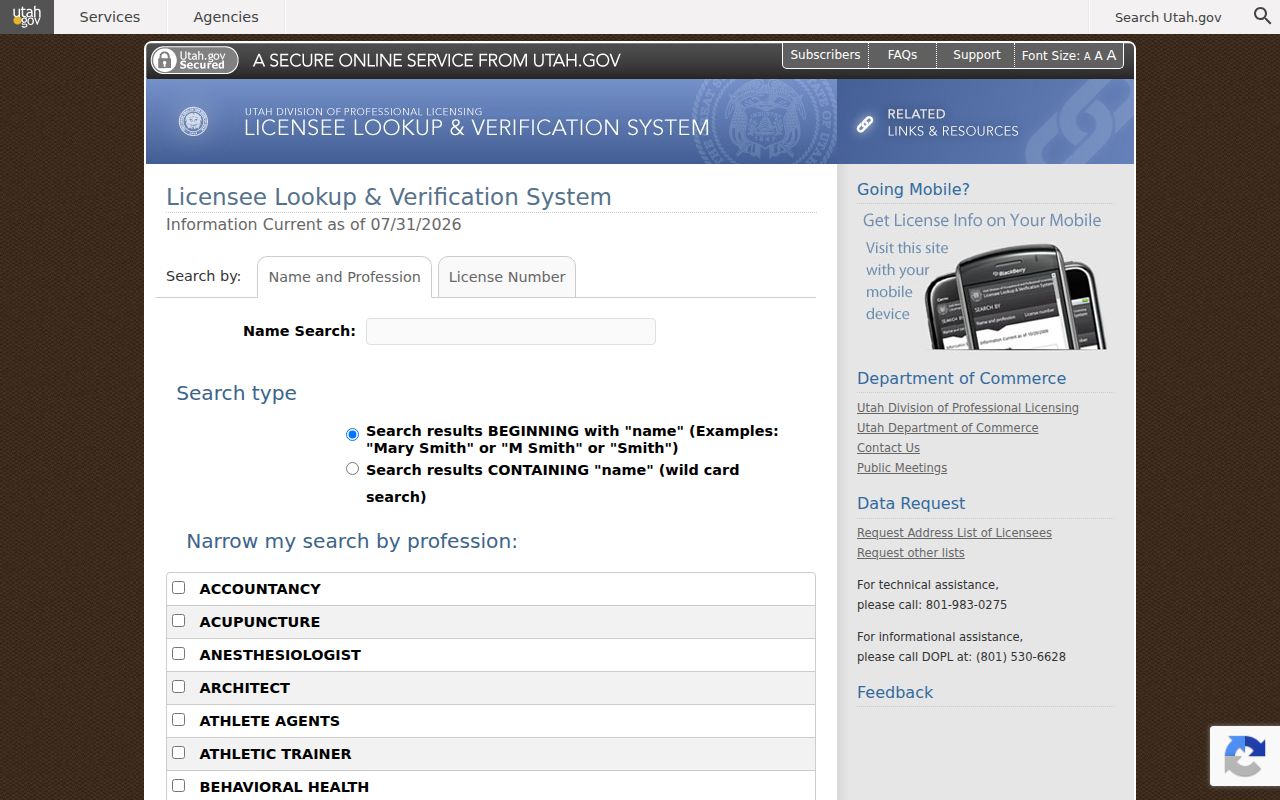
The state lookup is best used as one part of a cross-source identity check.
Find Hurricane Unclaimed Property
MyCash Utah offers a free owner-name search for property held by the state. A match may reveal a useful past address or family connection for someone tied to Hurricane. It does not prove that the named person still lives at that address. Common names need a second source, such as a deed, business filing, obituary, or probate record.
A Hurricane claimant must prove identity through the official state process. Avoid an advance fee or a caller who says money must be paid to release the property. The state search is the right place to begin, and its claim workflow explains what evidence a Hurricane claimant needs. Keep the result number and match details before moving to a second Hurricane record.
The official Utah unclaimed-property search provides the name and claim channel.
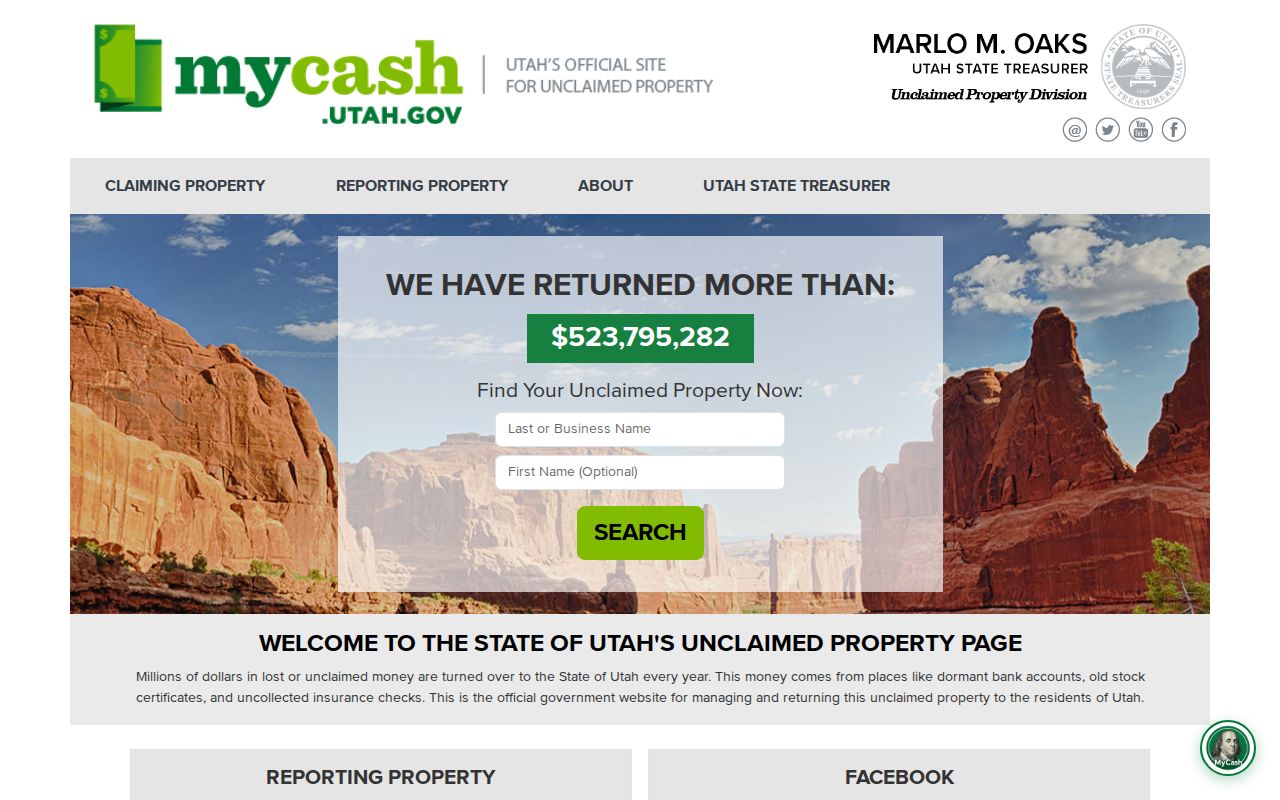
The official screen helps separate a real state-held-property lead from a fee-based solicitation.
Note: An unclaimed-property address is historical claim data, not proof of a person's current Hurricane residence.
Check Hurricane Custody Records
Hurricane custody records are split by agency. Washington County Sheriff maintains current Hurricane-area booking information. Utah Department of Corrections publishes state offender data, and the federal Bureau of Prisons has a separate inmate locator. A booking tied to Hurricane may show a name, booking facts, charges, bond, and status. A state result may show custody, location, status, and sentence-related public data.
Read those Hurricane fields with care. A charge is not a conviction, release status can change, and identical names in a Hurricane search require date or identifier checks. For a releasable incident report, use the Sheriff's records unit or GRAMA route. Hurricane Police accepts its own city records requests by email or at the police office, but protected investigative, victim, and juvenile details may be withheld or redacted.
The Utah corrections lookup is the official state-custody search.
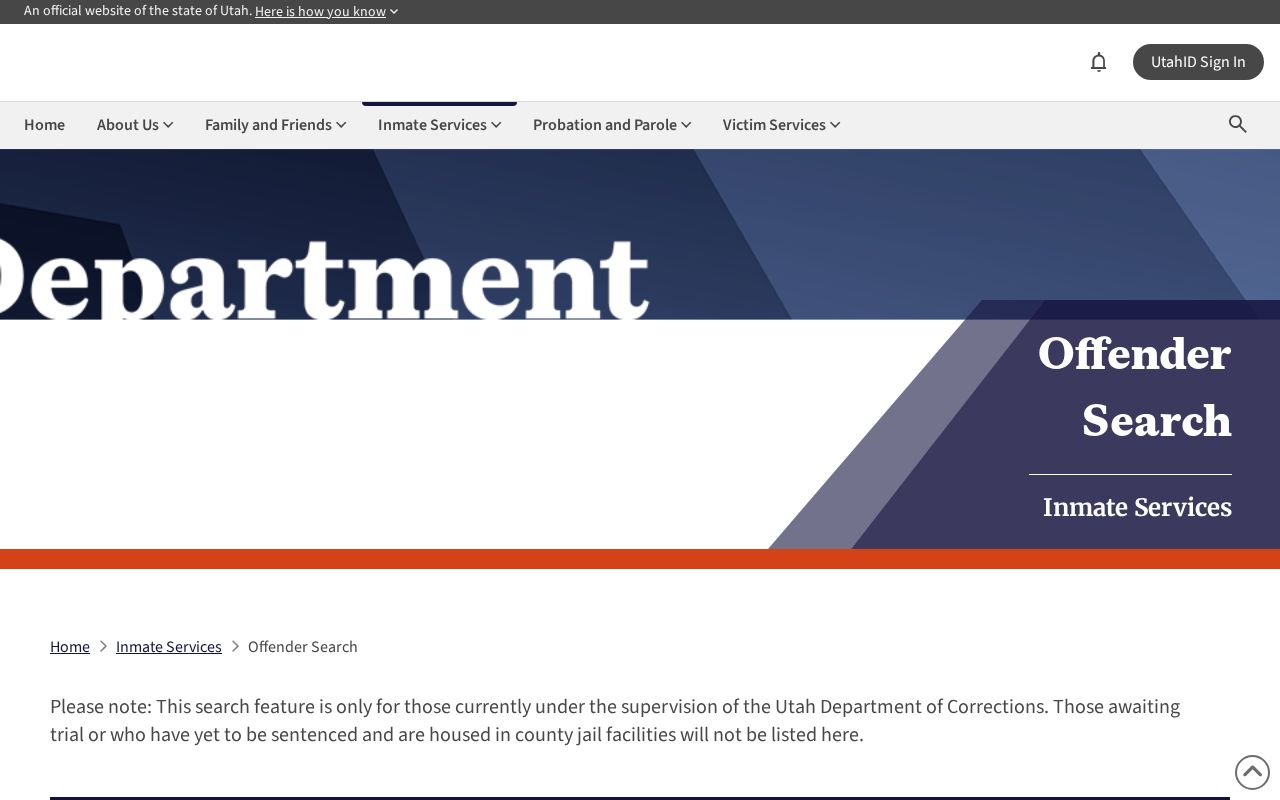
The state tool does not replace Washington County booking records or the federal inmate locator.
Limit Hurricane Voter Lookups
Utah's personal voter tool is designed for a voter checking their own information. It requires first name, last name, date of birth, and a CAPTCHA. An authenticated match can display name, physical and ballot mailing addresses, precinct, State House district, voter ID, party affiliation, and status. It is not an open browse-by-name directory.
Current law treats standard Hurricane voter data differently from private fields. Full date of birth, phone, email, signature, driver's-license or state-ID number, and Social Security number data remain private. At-risk Hurricane identity and address information can also be withheld. Vote history means the elections in which a Hurricane voter took part. It never shows a ballot choice. County or district data requests go to Washington County Clerk, while the Lieutenant Governor sells only the statewide file under strict use and security rules.
Compare Hurricane Search Sources
Official Hurricane and Utah records are built for a defined public task. Each has a named custodian, known fields, and a way to seek a copy or correction. Commercial compilations may be fast, but they can merge people with the same name, retain old addresses, or hide the original source. Treat a broad result as a lead and return to the deed, docket, license, archive, or city directory that created the fact.
| Source type | Best use | Main limit |
|---|---|---|
| Official Hurricane or county record | Confirm a named event, owner, filing, or office contact | Split among custodians and not always online |
| Utah statewide lookup | Check courts, licenses, custody, or unclaimed property | Each tool covers only its own record set |
| Library or archive | Trace older residents, families, and address history | May require a visit, request, or microfilm |
| Commercial compilation | Generate a tentative lead | Source, age, and same-name accuracy may be unclear |
Ask two questions before accepting a match: does the record fit the right time and place, and does a second independent source connect the same person? That check is especially important in a fast-growing city where old and new Hurricane addresses can sit in different plats or jurisdictions.
Protect Names in Hurricane Records
Utah GRAMA classifies records as public, private, controlled, or protected. It does not create a broad right to erase accurate deeds, dockets, or meeting files. Ask the actual custodian whether a law allows correction, redaction, or restricted status for the field at issue. Washington County also offers Property Watch to alert an enrolled user to later recorded-document activity. That notice service does not hide an ownership record.
Utah Safe at Home provides a substitute address and mail-forwarding process for eligible survivors. Enrollment, renewal, and agency use follow the current program rules, and protection is prospective. It cannot promise removal of each older public appearance. Recorded documents have a separate process for personal identifiers that were unlawfully included, and the Recorder can identify the proof or order needed.
Keep shared copies to the minimum needed. Do not post a private phone, birth date, signature, or protected address simply because it appeared in a mixed file. A sound Hurricane records search verifies the person while respecting every field that the law keeps private.